
College baseball’s path to professional stardom has rarely been clearer than it is during the 2026 season. The road to Omaha has long functioned as a proving ground for elite amateur pitchers, but the current class of arms brings unprecedented velocity, analytics-backed development, and draft intrigue. As of March 10, 2026, several dominant starters and high-leverage arms have already begun separating themselves during the demanding early non-conference slate. Professional scouts are treating these performances as critical evaluation points ahead of the 2026 MLB Draft scheduled for July 11–14 in Philadelphia. Programs across the country are showcasing pitchers who possess the stuff, durability, and data profiles that front offices believe translate directly into professional success.
The "Stress-Test" Phase — Why March Matters for the 2026 Draft
The early portion of the NCAA baseball calendar serves as a laboratory for evaluating elite arms under competitive pressure. As March unfolds, coaching staffs push their weekend starters into demanding mid-week matchups that replicate postseason tension. These outings frequently shape draft narratives months before conference championships or the College World Series arrive. Scouts fill stands during these contests because pitchers reveal how their arsenals hold up when routines change and pitch counts climb. The 2026 class has already demonstrated exceptional depth, with multiple frontline starters and high-leverage arms flashing velocity, strikeout dominance, and the mechanical consistency modern scouting departments prioritize when projecting professional development trajectories.
Mid-week games in early March operate as auditions for pitchers trying to solidify their roles before conference play begins. Coaches often stretch pitch counts or test starters on shorter rest, replicating the stress environments scouts associate with professional rotations. These appearances provide evaluators with a deeper look at command stability, recovery patterns, and how a pitcher adapts when the opposing lineup has already studied video.
By early March, front offices begin aligning amateur scouting reports with internal analytics models. Performances during this stretch of the schedule become a meaningful data point. Velocity trends, swing-and-miss rates, and pitch movement are logged alongside biomechanics data, helping teams forecast which collegiate arms can anchor professional rotations in the coming decade.
The Ace Duel — Jackson Flora vs. Cameron Flukey
Among the most compelling storylines of the early season is the contrast between two elite starters who have emerged as central figures in the 2026 draft conversation. Both pitchers dominate through different stylistic approaches, yet each demonstrates the combination of power and precision that professional scouts crave. Their outings during the non-conference schedule have become must-watch events for evaluators tracking the elite tier of the class. Each appearance carries implications for first-round positioning, and both pitchers represent programs with legitimate postseason ambitions. The ongoing comparison between their arsenals and statistical outputs has already become a defining narrative of the early draft cycle.
Jackson Flora (UC Santa Barbara) stands out immediately when he takes the mound. The 6'5" right-hander unleashes a fastball-slider combination that consistently touches 100 mph, placing him among the hardest throwers in college baseball. His rising draft stock has propelled him into discussions as a top-5 overall draft projection. Scouts praise how his slider tunnels off the high-velocity fastball, creating late swings and uncomfortable at-bats for hitters who struggle to differentiate between the two pitches out of his release point.
Cameron Flukey (Coastal Carolina) enters the season with a decorated resume. The 2026 Preseason Pitcher of the Year built his reputation during a remarkable 2025 campaign that produced 118 strikeouts in 101.2 IP. His ability to maintain command deep into games while generating swing-and-miss results has helped Coastal Carolina position itself for another postseason push. Flukey’s mission during 2026 centers on returning the program to the MCWS Finals, while simultaneously proving his dominance can translate to the professional level.
SEC Power Arms — The Velocity Vanguard
Few conferences develop pitching talent with the same intensity as the Southeastern Conference. The league’s schedule forces pitchers to face elite hitters weekly, making it an ideal proving ground for professional projection. The 2026 draft class features multiple SEC arms capable of overwhelming lineups with premium velocity. Two names consistently surface at the top of scouting reports, both delivering the kind of fastball power that has become synonymous with modern pitching development. Their roles within powerhouse programs also place them under constant scrutiny from evaluators who track durability, pitch efficiency, and mental resilience under pressure.
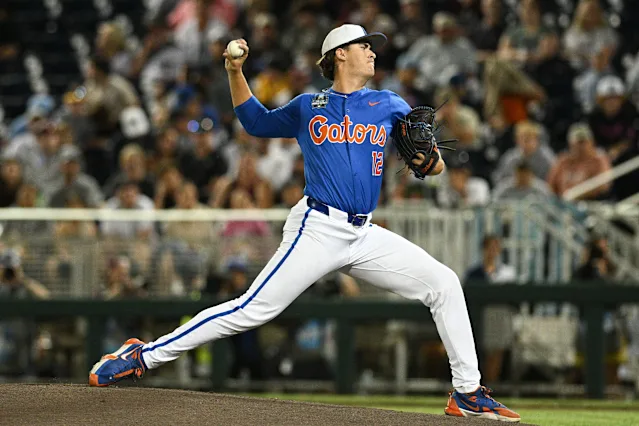
Liam Peterson (Florida) has rapidly become the centerpiece of the conference’s pitching hierarchy. Known widely as the “Gator Ace,” Peterson features an elite mid-90s fastball that peaks at 99 mph. Scouts frequently reference the life on his heater and the late riding action that allows it to miss bats at the top of the strike zone. Those attributes have pushed many evaluators to rank him as the #1 overall college pitcher for 2026, placing him squarely in contention for the top selection of the draft.
Gabe Gaeckle (Arkansas) represents a different archetype of premium arm. Known for his 99 mph arm speed, Gaeckle initially built his reputation as a high-leverage bullpen presence. Arkansas has gradually transitioned him into a hybrid starter/closer role, allowing him to influence games across multiple innings. His explosive velocity and aggressive attack mentality have made him one of the most intriguing development experiments among elite college pitchers.
Scouting the Future — Data over "Eye Tests"
Modern evaluation of amateur pitchers has evolved dramatically. The traditional reliance on visual scouting reports has expanded into a technology-driven ecosystem that measures every detail of a pitcher’s mechanics and pitch characteristics. Teams track arm slot consistency, spin efficiency, movement profiles, and recovery metrics to determine whether collegiate dominance can survive the transition to professional baseball. As these technologies become standard, the pitchers dominating NCAA competition are simultaneously being examined through professional development frameworks. Their performances provide not only box score success but also valuable predictive signals for organizations preparing their draft strategies.
Organizations now analyze pitchers using high-speed cameras and motion-capture systems. These tools reveal stress points in delivery mechanics, helping teams determine whether a pitcher’s velocity profile is sustainable over a full professional season. The insights generated by this technology influence how teams structure their draft boards and identify developmental priorities.
College statistics still carry enormous weight. Strikeout totals, innings pitched, and consistency across competitive schedules remain essential indicators of readiness. For fans tracking the transition from collegiate stardom to professional development, resources dedicated to evaluating MLB prospects provide insight into how these performances translate into projected major-league value.
The Road to Philadelphia
As the season progresses toward postseason play, every start from the nation’s top arms carries greater implications for draft positioning. Teams projected to select early will track how these pitchers perform under escalating pressure, particularly during conference tournaments and the College World Series. The culmination of the evaluation process arrives in midsummer when the sport’s future stars gather for the draft ceremony. The class of 2026 has already demonstrated remarkable talent depth, ensuring that front offices will continue dissecting every pitch thrown between now and July.
The 2026 MLB Draft scheduled for July 11–14 in Philadelphia will bring together months of scouting reports, analytical models, and collegiate performance data. Every outing between March and draft day contributes to the evaluation profile for top pitchers hoping to hear their names called early.
Among the organizations positioned to benefit most from this pitching class is the Chicago White Sox, one of the potential lottery winners closely monitoring the elite college arms dominating the current season. Their scouting department will continue tracking velocity readings, strikeout production, and durability markers as the race toward Omaha ultimately feeds into draft decisions that could shape the franchise’s pitching future.
